Email Enrichment vs Lead Generation: Key Differences
Explore the essential differences between email enrichment and lead generation to enhance your sales and marketing strategies effectively.
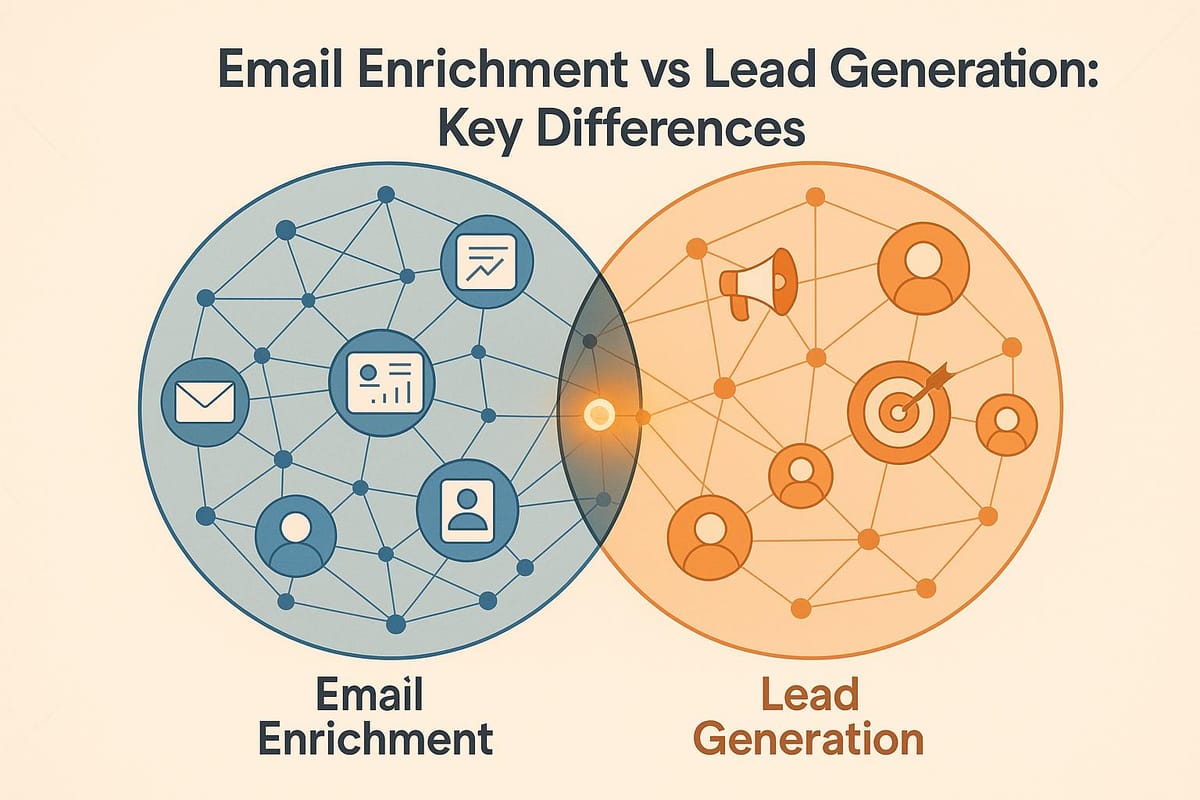
Email enrichment and lead generation are two distinct strategies that serve different purposes in sales and marketing. Here's the quick takeaway:
- Email Enrichment: Focuses on improving your existing contact database by filling in missing information like email addresses, phone numbers, or job titles. It's about refining the quality of your current data for better outreach and personalization.
- Lead Generation: Aims to find and capture entirely new prospects who may be interested in your product or service. This strategy is about expanding your reach and building a pipeline of potential customers.
Both methods can work together to boost your sales and marketing efforts. While enrichment enhances the quality of your existing data, lead generation brings in fresh opportunities for growth.
Quick Comparison
| Aspect | Email Enrichment | Lead Generation |
|---|---|---|
| Purpose | Improve existing contact data | Acquire new prospects |
| Cost | Lower per contact | Higher per lead |
| Time to Results | Faster | Longer |
| Focus | Quality (detailed profiles) | Quantity (new leads) |
| Scalability | Limited to current database size | Expands into new markets |
| Personalization | High | Moderate initially, improves over time |
If you're working with an incomplete database, enrichment can help you optimize your current contacts. If you're looking to grow your audience, lead generation is the way to go. Many businesses combine both for a balanced approach that supports immediate results and long-term growth.
Enrich your lead lists with business emails ( lead generation tutorial for beginners)
What Email Enrichment and Lead Generation Mean
Email enrichment and lead generation play different but complementary roles in how businesses attract and engage customers. While both aim to boost sales and marketing performance, they address distinct aspects of customer acquisition. Here's a closer look at what each process involves and how they contribute to your strategy.
What is Email Enrichment?
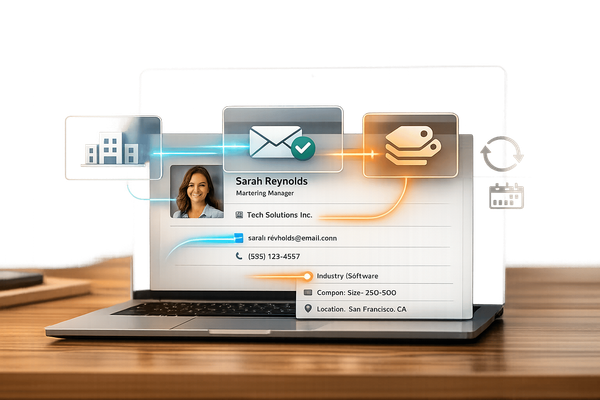
Email enrichment is all about improving your existing contact database by filling in missing details and turning basic records into more comprehensive profiles.
The main purpose of email enrichment is to refine your marketing and sales efforts by adding depth to the data you already have. By gathering extra information - like job titles, phone numbers, or even behavioral insights - you can create detailed profiles that allow for better personalization, segmentation, and lead qualification. This, in turn, enhances campaign performance and customer engagement.
For instance, imagine you have a contact list with just names and company names, but you're missing crucial details like email addresses or roles. Email enrichment tools step in to fill these gaps, giving you a fuller picture of your contacts.
HubSpot's early journey is a great example of how email enrichment can transform outcomes. Initially, the company focused heavily on lead generation, which brought in a flood of unqualified leads. By adopting lead enrichment strategies, HubSpot improved its ability to qualify leads, leading to a 20% boost in conversions and a 30% reduction in the sales cycle.
This process often involves cross-referencing your data with external sources like social media, public databases, or company records. The result? A more complete and actionable contact list that supports targeted and personalized outreach.
By 2025, 68% of marketers are expected to prioritize lead enrichment as part of their strategies, recognizing its ability to improve lead qualification and shorten sales cycles.
What is Lead Generation?
Lead generation, on the other hand, focuses on building a fresh pipeline of potential customers. Instead of enhancing existing contacts, this process is all about attracting and capturing new prospects who show interest in your product or service. The ultimate goal is to grow your customer base and keep your sales pipeline flowing.
Unlike email enrichment, which works with data you already have, lead generation is about expanding your reach to entirely new audiences. This involves identifying and engaging people who aren't yet in your system but could become future customers.
Lead generation relies on strategies like content marketing, social media campaigns, webinars, trade shows, paid advertising, SEO, and referrals. For example, when someone downloads your eBook, signs up for your newsletter, or requests a product demo, they officially enter your database as a new lead.
Salesforce's approach shows how businesses can balance both methods. Initially, Salesforce focused on lead generation through its CRM platform. Later, it introduced Marketing Cloud, a lead enrichment tool that adds valuable data like demographics and intent signals. This combination improved lead quality and boosted conversion rates.
The process typically starts with creating compelling offers or content that resonate with your target audience. Once you capture their contact information through forms or landing pages, these new contacts become leads that can be nurtured and qualified over time.
By 2025, businesses are expected to allocate 45% of their marketing budgets to lead generation, while 31% will go toward lead enrichment. This split highlights the ongoing need to attract new prospects while also maximizing the potential of existing contacts.
The key difference lies in their focus: lead generation emphasizes quantity - bringing in new leads to fill your pipeline - while email enrichment emphasizes quality, refining your existing leads to make them more effective. Together, these approaches offer a balanced strategy for customer acquisition.
How Each Process Works
Email enrichment and lead generation each play a unique role in shaping your sales funnel, following distinct workflows that complement one another.
Email Enrichment Steps
Email enrichment transforms basic contact details into detailed profiles. It starts with data collection, pulling raw email data from sources like website forms, social media platforms, CRM systems, or third-party tools. The system then matches this data with existing records using unique identifiers, such as email addresses or company names. This ensures updates are accurate and avoids creating duplicate entries.
The process includes sequential querying, where multiple data providers are checked in a specific order. If one source doesn’t have the necessary details, the system moves to the next provider, filling in gaps with extra information like job titles, phone numbers, company data, or social media profiles.
Once the data is gathered, it undergoes validation to confirm email syntax, domain accuracy, mailbox existence, and phone number validity. After validation, the enriched data is integrated into your CRM, enabling automated workflows and making detailed profiles readily accessible to your team. Many modern systems also assign confidence scores (ranging from 0 to 100) to data based on its source credibility and how recently it was updated. This helps filter out low-quality or outdated information.
Now let’s look at how lead generation builds your customer pipeline.
Lead Generation Steps
Lead generation starts by identifying your ideal customer profiles based on demographics, firmographics, and behavioral data. Campaigns are then launched to engage this audience, often using offers like eBooks, webinars, or free trials. When prospects interact with these campaigns, they provide their contact details through forms or landing pages, officially entering your database.
Once leads are captured, they are qualified using scoring models or criteria like BANT (Budget, Authority, Need, and Timeline) to prioritize the most promising prospects. From there, lead nurturing takes over. Through targeted communications and ongoing tracking of metrics - such as conversion rates and cost per lead - you guide these prospects smoothly through your sales funnel.
Using Both Methods Together
Integrating email enrichment and lead generation can supercharge your sales efforts. By enriching new leads right after they’re captured, you immediately enhance basic contact details with extra information like job titles, company size, phone numbers, and social media profiles. This gives your sales team a complete view of each lead from the outset.
As discussed earlier, enriched data enables more tailored campaigns. Combining these methods allows for faster lead qualification and more precise audience segmentation, which leads to highly personalized marketing messages.
Additionally, progressive profiling ensures your lead information stays up to date over time. This approach is especially valuable for U.S. businesses in competitive markets, where quick responses and customized engagement are critical for boosting conversion rates.
Email Enrichment vs Lead Generation Comparison
Email enrichment focuses on improving the quality of your existing contact database, while lead generation is all about finding and acquiring new prospects.
With email enrichment, you’re working with contacts you already have. It’s about upgrading their profiles to enable more personalized and effective communication. However, this method is naturally limited by the size of your current database.
Lead generation, on the other hand, is designed to bring in fresh leads. While it often requires a higher upfront investment and a longer process to qualify these leads, it opens the door to reaching untapped markets and supports growth over the long haul.
Side-by-Side Comparison Table
| Aspect | Email Enrichment | Lead Generation |
|---|---|---|
| Primary Purpose | Update and enhance existing contact data | Acquire and identify new prospects |
| Cost | Lower cost per contact | Higher investment per new lead |
| Time to Results | Delivers quicker improvements in outreach | Takes longer to qualify and build new leads |
| ROI Timeline | Short-term gains in engagement | Medium- to long-term benefits |
| Conversion Impact | Boosts conversion with targeted messaging | Depends on lead quality and qualification |
| Data Quality | High – based on verified and enriched profiles | Variable – needs further qualification |
| Scalability | Limited by the size of the current database | Expands reach into new markets |
| Personalization | Enables high-level personalization | Starts moderate but improves with nurturing |
| Sales Efficiency | Streamlines outreach with actionable insights | Requires additional steps to qualify leads |
| Compliance | Easier with implied consent for existing contacts | Needs careful handling of consent and opt-ins |
This table highlights the key differences, helping you weigh your options. Email enrichment is excellent for refining your outreach through detailed customer insights, while lead generation is essential for expanding your market reach.
If you’ve already maximized the potential of your current database or are aiming to enter new market segments, lead generation is the way to go. Although it demands more time and resources to qualify leads, it sets the stage for long-term growth and revenue.
Ultimately, your choice should align with your business goals. For many, a hybrid approach - combining the strengths of both strategies - can offer the best of both worlds: immediate results and sustainable growth.
Tools Comparison: Enrichfox vs Competitors
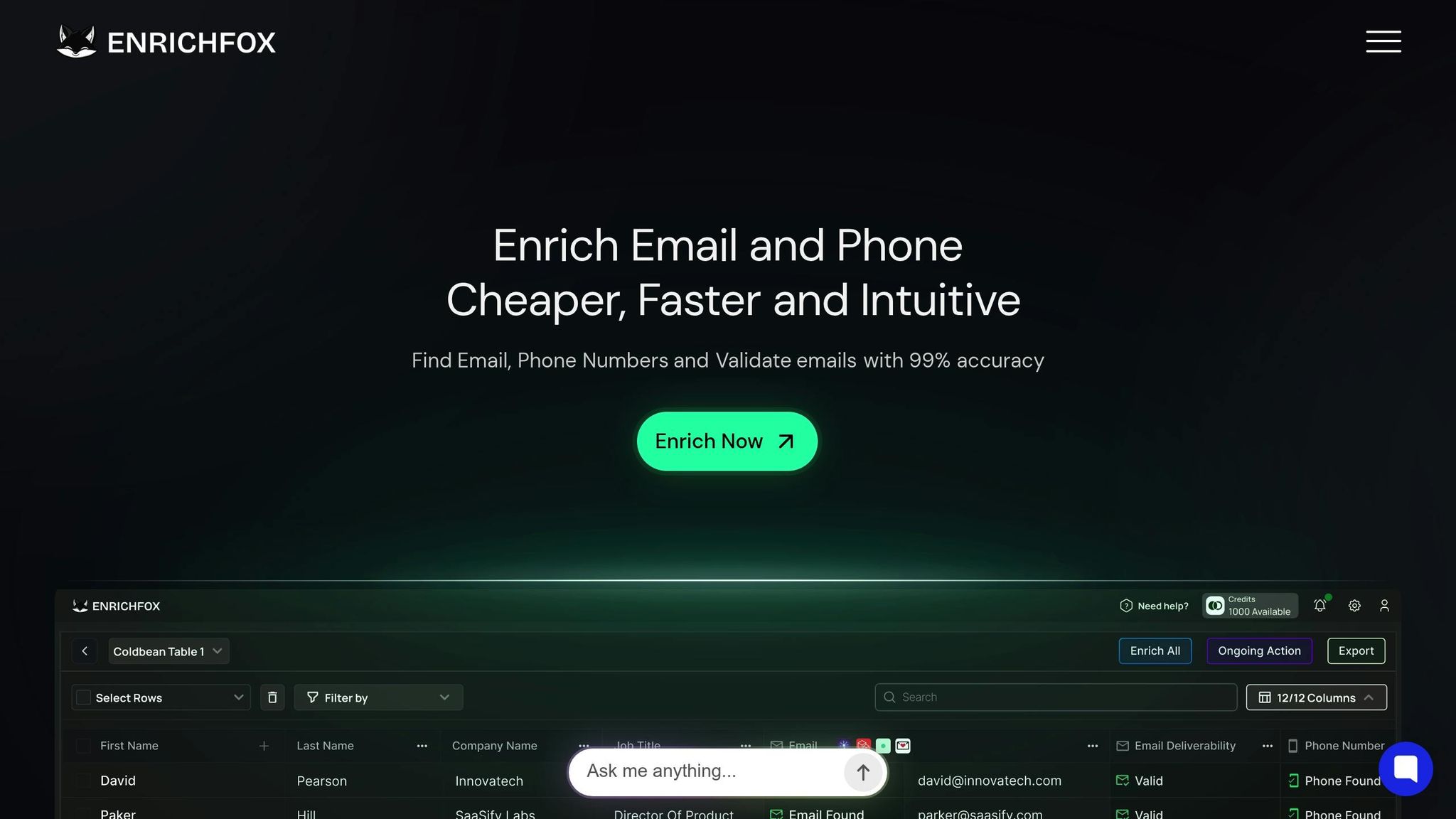
When it comes to maximizing email enrichment, picking the right tool can make all the difference. For US sales and marketing teams, the market offers a variety of options, from established names like Apollo and ZoomInfo to newer players like Enrichfox and Clay. Each tool comes with its own pricing structure and features, so understanding what fits your needs is key.
One common challenge is pricing. Most vendors charge per enriched contact, leading to varying monthly costs depending on usage. This can make budgeting tricky, especially for teams with fluctuating demands.
Feature Comparison Table
| Tool | Pricing | Key Strengths | Best For |
|---|---|---|---|
| Enrichfox | $0.00025 per verified email, $0.05 per email found, $0.03 per phone | 99% accuracy, catch-all email detection, pay-per-use model | Teams seeking predictable costs and high accuracy |
| Apollo | Free: 100 credits/month, Basic: $59/user/month, Pro: $99/user/month | All-in-one sales platform, CRM integration, large database | Sales teams needing CRM functionality |
| ZoomInfo | Custom pricing (typically $12,000–$24,000/year) | Comprehensive B2B database, intent data, enterprise features | Large enterprises with substantial budgets |
| Clay | Custom pricing based on usage | Advanced automation, waterfall enrichment, multiple data sources | Growth teams focused on automation |
| Datanyze | Nyze Pro 1: $21/month, Nyze Pro 2: $39/month | Technology tracking, website visitor identification | Tech-focused prospecting |
This table summarizes the standout features of each tool, but let’s dive into what makes Enrichfox a standout choice.
Why Enrichfox Stands Out
Enrichfox takes a different approach with its pay-as-you-use pricing model: $0.00025 per verified email, $0.05 per email found, and $0.03 per phone number. This transparent structure ensures you only pay for what you actually use, making it easier for teams to manage costs.
Accuracy is another area where Enrichfox shines. With a 99% accuracy rate, it helps reduce bounce rates and protects your sender reputation - an essential factor for US businesses navigating strict email deliverability standards. Its catch-all email detection further ensures valuable contacts aren’t missed or incorrectly flagged, which can be a game-changer for sales teams.
Enrichfox also integrates seamlessly with existing systems. Whether it’s CRMs, marketing automation platforms, or custom applications, the platform’s API and webhook features make integration smooth and hassle-free. Bulk enrichment capabilities and CSV export options allow teams to process large datasets efficiently while maintaining compatibility with their tools.
For teams concerned about data security, Enrichfox offers robust protections without locking you into costly enterprise contracts. This makes it an appealing option for smaller teams and growing businesses that need advanced security without breaking the bank.
Another standout feature is Enrichfox’s real-time chat support during US business hours. Unlike competitors that rely on scheduled calls or lengthy email exchanges for support, Enrichfox provides quick resolutions to technical and integration issues, saving teams valuable time.
Finally, Enrichfox addresses a common frustration in the enrichment tool market: pricing transparency. While many vendors require sales calls to provide quotes - especially for enterprise solutions - Enrichfox publishes clear, usage-based pricing upfront. This allows teams to calculate costs accurately before making a commitment, eliminating unnecessary guesswork.
Practical Tips for US Sales and Marketing Teams
These tips build on earlier technical details, showing how strategy and compliance work together for US sales teams. Whether you choose email enrichment or lead generation depends on your data quality, goals, and resources - each method can shape your sales and marketing outcomes differently.
How to Choose the Right Method
Evaluate your current data. If you have a large contact database but it’s riddled with outdated or incomplete information, email enrichment should be your go-to. Over time, contact details naturally become less accurate.
Think about your growth stage and goals. If you’re a new company or breaking into a fresh market, lead generation can help you build a strong prospect list from scratch. On the other hand, established businesses with refined sales processes often benefit more from enriching existing contacts, which can lead to higher conversion rates.
Factor in your budget. Lead generation tends to require more upfront investment. In contrast, email enrichment can be more cost-effective. For instance, Enrichfox offers a pay-per-use model at $0.05 per email, helping you manage costs.
Consider your timeline. Lead generation campaigns can take weeks or even months to gain traction and deliver qualified leads. If you need quicker results, email enrichment allows you to update your database and launch targeted campaigns almost immediately.
Assess your team’s capacity. Lead generation often demands significant effort, from creating content to managing follow-ups. Email enrichment, however, integrates easily into existing workflows and requires less ongoing attention - perfect for smaller teams.
Check tool compatibility. Seamless integration with your current CRM or marketing automation tools is essential. Whether you’re enriching emails or generating leads, choosing tools with API integrations and webhook support ensures smooth workflows.
Once you’ve selected a method, make sure your strategy aligns with legal and regulatory standards.
US Compliance and Privacy Rules
Compliance isn’t optional - it’s a critical part of any strategy.
Adhere to the CAN-SPAM Act. This means you need clear sender identification, honest subject lines, and simple unsubscribe options to avoid hefty fines.
Understand the California Consumer Privacy Act (CCPA). If you’re working with California residents’ data, you must provide clear privacy notices and honor opt-out requests within the required timeframes.
Keep industry-specific regulations in mind. Different sectors have unique rules. For example:
- Healthcare organizations must comply with HIPAA.
- Financial services firms need to follow GLBA guidelines.
- Educational institutions handling student data must meet FERPA standards.
These regulations affect how you collect new leads and manage enriched data.
Set clear data retention policies. Define how long you’ll keep enriched data or newly generated leads. Regularly purging outdated information not only reduces storage costs but also minimizes compliance risks.
Manage consent carefully. Always document how you obtained contact information and track consent preferences. Modern enrichment tools can simplify this by maintaining detailed records and audit trails.
Review cross-border data rules. If you’re dealing with international prospects, like those in Europe, GDPR compliance becomes a factor - even for US-based companies. Opt for tools with strong data protection features.
Conduct regular compliance audits. Periodic reviews of your data practices can help catch potential issues early. Check your data collection methods, enrichment sources, and lead generation processes to ensure they meet regulatory standards.
Conclusion
Understanding the distinction between email enrichment and lead generation is key to building effective sales and marketing strategies. Email enrichment focuses on filling in the gaps in your current contact database, such as adding phone numbers, job titles, or social media profiles.
The right choice between these two methods depends on your business's current needs. Established companies struggling with incomplete or outdated databases can see immediate benefits from enrichment. Meanwhile, startups or businesses venturing into new markets often prioritize lead generation to create an entirely new prospect list.
Email enrichment delivers quick and measurable results (for instance, Enrichfox charges just $0.05 per email), making it a cost-effective option. On the other hand, lead generation requires more upfront effort and investment, but it has the potential to bring in a larger volume of new prospects over time.
Many successful businesses in the US don’t choose one over the other - they combine both strategies. Lead generation helps them widen their market reach, while enrichment ensures their existing contact lists are accurate and complete, boosting conversion rates. This dual approach ensures a balance between quantity and quality in their sales funnel, while also supporting compliance with regulatory requirements.
Speaking of compliance, it’s critical. Laws like CAN-SPAM, CCPA, and HIPAA set strict rules for data handling. Modern enrichment tools with built-in data protection and audit trails make it easier to stay compliant while improving your data. For example, Enrichfox stands out with its high accuracy, seamless integrations, and flexible pay-per-use model, offering a practical solution for businesses aiming to enhance their contact data without overhauling their systems.
Ultimately, the best approach depends on your growth stage, the quality of your data, your budget, and your compliance obligations. Whether you’re enriching existing contacts or building a new lead pipeline, the key is to choose tools and strategies that align with your goals while upholding data privacy and accuracy.
FAQs
What’s the best way for businesses to combine email enrichment and lead generation to drive more sales?
Combining email enrichment with lead generation offers a smart way for businesses to sharpen their sales and marketing strategies. While lead generation is all about discovering new potential customers, email enrichment focuses on upgrading the quality of your existing contact data, making it easier to connect with leads in a meaningful way.
When these two strategies work hand in hand, businesses can create a more efficient and effective sales funnel. The process begins with generating leads, followed by enhancing their data through email enrichment. This refined data allows for better personalization, stronger lead qualification, and more precise targeting. The result? Higher engagement and improved conversion rates.
What legal and compliance factors should US businesses consider when using email enrichment or lead generation?
When leveraging email enrichment or lead generation, businesses in the U.S. need to prioritize staying compliant with regulations to steer clear of legal trouble. The FCC regulations, updated as of December 2023, now mandate explicit, one-to-one consent from consumers for any calls or texts. This means each company reaching out to a customer must secure its own separate permission - and keep detailed records to prove it.
Equally important is aligning your data privacy practices with what customers expect. Opt-in agreements should be crystal clear, specific, and directly tied to the type of communication customers are agreeing to. Regularly revisiting and refining your consent processes not only ensures compliance but also strengthens trust with your audience.
How can a company decide whether to focus on email enrichment or lead generation?
Choosing between email enrichment and lead generation boils down to what your business needs most right now. If your main goal is to find new potential customers, lead generation is the better fit. It focuses on gathering fresh contact information from prospects, helping you grow your database with new leads.
On the flip side, if you want to enhance the data you already have, email enrichment is the smarter choice. This process adds valuable details - like job titles, company size, or industry - so you can target your audience more effectively.
If refining your marketing strategy and personalizing outreach efforts are top priorities, email enrichment can help boost engagement and improve conversion rates. But if you're looking to expand your reach and discover fresh opportunities, lead generation is the way to go. Think about your current sales and marketing goals to decide which approach makes the most sense for your business.