Why Email Bounce Rates Kill Your Campaigns
High email bounce rates can damage your sender reputation and campaign performance. Learn how to reduce bounces and improve deliverability.

When your emails bounce, they don’t just fail to reach inboxes - they damage your sender reputation. Internet Service Providers (ISPs) monitor bounce rates to evaluate your email quality. High bounce rates, especially from invalid addresses (hard bounces), can cause ISPs to flag or block your emails. This means fewer people see your messages, harming your campaign performance.
Key Takeaways:
- Types of Bounces:
- Hard Bounces: Permanent issues like invalid emails.
- Soft Bounces: Temporary problems like full inboxes.
- Main Causes:
- Outdated or incorrect email addresses.
- Poor list management (e.g., purchased lists).
- Technical issues like missing SPF, DKIM, or DMARC records.
- Solutions:
- Use email verification tools to clean your list.
- Implement double opt-in to avoid fake signups.
- Monitor metrics like bounce rates (aim for below 2%).
Quick Tip:
Tools like Enrichfox.ai offer cost-effective email validation, helping reduce bounces and improve deliverability.
Keeping your email list clean and monitoring your sender reputation ensures your campaigns stay effective and reach their intended audience.
What Email Bounce Rates Are and Why They Matter
Email Bounce Rate Basics
Email bounce rate refers to the percentage of emails that fail to reach their intended recipients because the receiving servers reject them. Simply put, when an email bounces, it means the recipient's server has turned it away.
There are two main types of email bounces to be aware of:
- Hard bounces: These are permanent rejections, often caused by invalid or inactive email addresses. Once an email hard bounces, it won't be delivered, no matter how many times you try.
- Soft bounces: These are temporary issues, such as when a recipient's mailbox is full or the server is experiencing technical difficulties. These emails might eventually go through once the problem is resolved.
Understanding these types is key to minimizing bounces and ensuring your email campaigns perform effectively.
Why Do My Emails Bounce? 😱 Reduce Email Bounce Rate in 4 Ways!
Main Causes of High Email Bounce Rates
High email bounce rates can often be traced back to a handful of common issues. These problems are not only frustrating but can also harm your sender reputation if left unchecked. Let’s break down the key reasons behind these bounce rate challenges.
Old or Incorrect Email Data
One of the most frequent culprits is outdated or inaccurate email addresses. People change jobs, close accounts, or abandon personal email addresses, especially in B2B scenarios where work emails can become inactive shortly after someone leaves a company.
Simple errors like typos - missing the "@" symbol, misspelled domain names, or incorrect extensions - are also a major cause of hard bounces. These mistakes often occur during manual data entry or when contact lists are imported from multiple sources without proper validation.
Poor List Management Practices
Using purchased email lists or combining contacts from different sources without verifying their accuracy can wreak havoc on your bounce rate. These lists are often riddled with fake, outdated, or non-consented email addresses, which not only increase bounces but also harm your sender reputation.
Ignoring engagement signals is another issue. Continuing to email contacts who haven’t interacted with your messages in a long time can lead to higher bounces and reduced deliverability over time.
Technical Configuration Issues
Even if your email data is perfect, technical missteps can still lead to bounces. For example, missing or incorrectly set DNS authentication records - such as SPF, DKIM, and DMARC - can cause emails to be flagged and rejected by recipient servers.
A poor IP reputation is another factor. If your sending IP has been previously associated with spam or excessive bounces, email providers may block your messages outright. Similarly, incorrect server configurations, like faulty MX records or improper SMTP settings, can make your emails appear suspicious to receiving systems.
Sudden changes in sending patterns can also trigger problems. For instance, sending a large volume of emails after a period of inactivity or dramatically increasing your send frequency can cause recipient servers to temporarily block your messages as they evaluate the change in behavior.
How to Reduce Email Bounce Rates
A high email bounce rate can hurt your campaigns, but the good news is that it’s manageable. Here are some effective strategies to tackle the issue.
Clean and Verify Contact Lists
Keeping your email list up-to-date is crucial. Email lists naturally degrade by about 28% each year. To counter this, use bulk and real-time validation tools to clean your existing lists and prevent invalid entries from sneaking in. These tools can quickly identify issues like missing "@" symbols, malformed domains, or inactive accounts. For example, if you have a 10% bounce rate on a list of 100,000 emails, it could cost you $15,000. Once your list is cleaned up, ensure quality moving forward by verifying new subscribers as they sign up.
Use Double Opt-In Processes
Double opt-in is a simple yet effective way to ensure only valid email addresses make it onto your list. Here’s how it works: after someone subscribes, they receive a confirmation email with a link they must click to verify their address. While this extra step might slightly reduce the number of signups, it results in a cleaner, more engaged list. Plus, it helps filter out fake or mistyped emails, reducing bounces and safeguarding your sender reputation.
Track Sender Reputation and Metrics
Maintaining a strong sender reputation is just as important as keeping a clean list. Focus on monitoring key metrics to ensure consistent inbox delivery:
- Bounce rates: Ideally, keep this below 2%. Rates between 2% and 5% need attention, and anything over 5% requires immediate action.
- Open and click-through rates
- Unsubscribe rates
- Spam complaint rates
Some email service providers also factor in open and click-through rates when determining whether your emails are spam. Regularly review bounce reports from your email service provider (ESP) to remove persistent hard bounces promptly. Strengthen your credibility with ISPs by implementing email authentication protocols like SPF, DKIM, and DMARC. If you’re using a new domain or IP address, start with smaller email volumes and gradually increase them to build trust with inbox providers.
Best Tools for Contact Data Verification and Enrichment
Accurate and well-enriched contact data plays a crucial role in the success of any campaign. The right tools not only help reduce email bounce rates but also ensure your outreach efforts stay effective. With email databases naturally deteriorating by about 28% annually, investing in reliable verification and enrichment tools is a smart move to maintain deliverability and protect your campaigns.
Top Tool Options
Given the constant challenge of data decay, here are some of the top tools to consider for improving your contact lists:
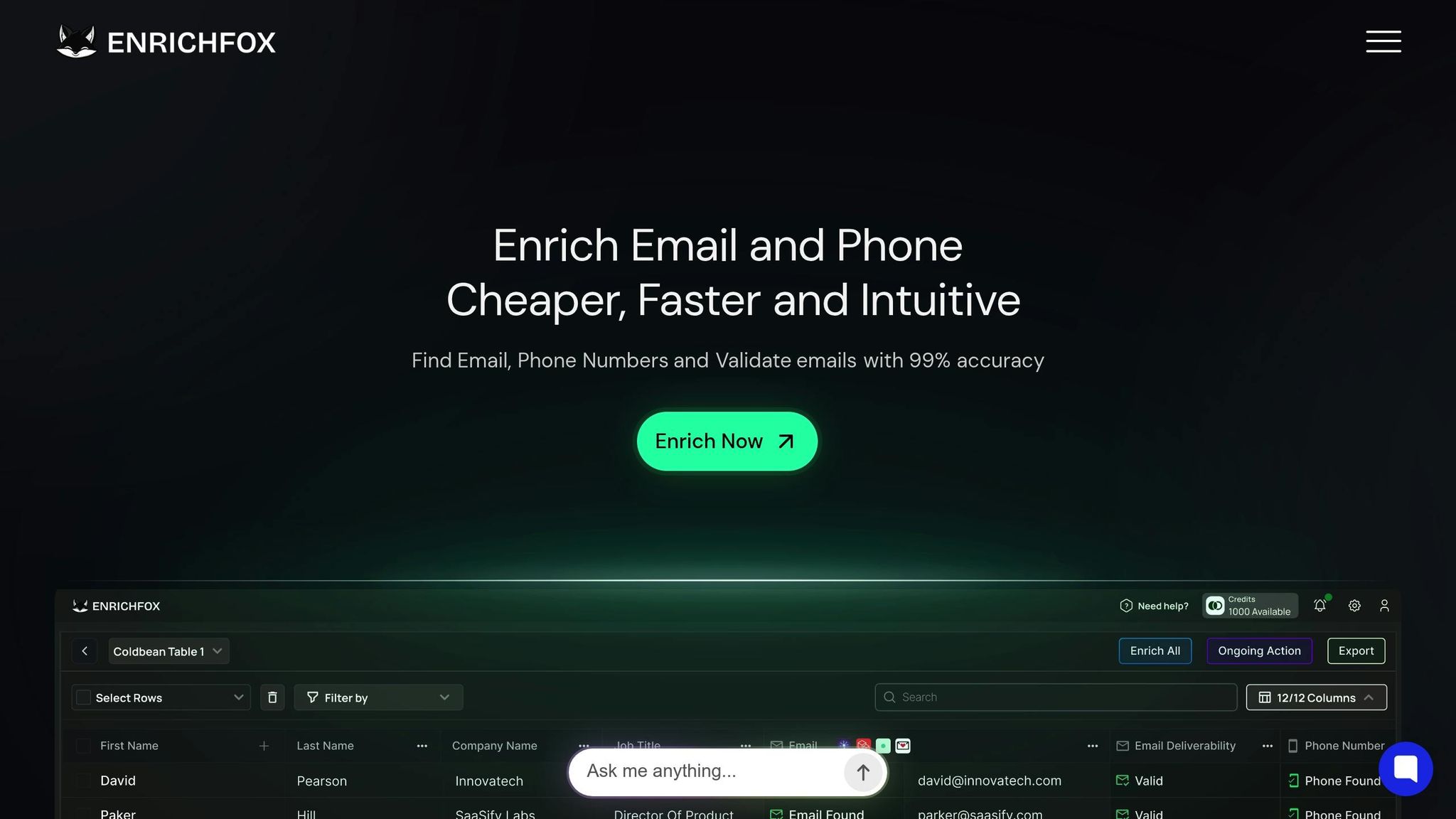
- Enrichfox.ai: Known for its pay-as-you-go pricing, this tool charges $0.00025 per verified email and $0.05 per email found. It boasts 99% accuracy in email validation and offers features like bulk enrichment, API integrations, and CSV exports. Its standout capability includes detecting catch-all emails and validating phone numbers.
- ZoomInfo: A strong choice for B2B-focused campaigns, ZoomInfo provides detailed company and contact data along with email verification. Its enterprise-level solution includes advanced search filters and seamless integrations. Pricing typically starts in the hundreds of dollars per month.
- Apollo: Popular among sales teams, Apollo combines email finding with CRM functionality. It offers both free and paid tiers, with paid plans starting at $39 per month. Its all-in-one approach is ideal for teams looking for integrated sales tools.
- Clay: This tool specializes in data enrichment workflows, allowing users to merge data from multiple sources for better contact discovery. Pricing ranges from $149 to over $800 per month, depending on usage. Its step-by-step email discovery process is particularly useful.
- DropContact: Focused on GDPR compliance, DropContact delivers real-time email generation and verification. It offers transparent pricing at approximately €0.20 per enriched contact, making it a valuable option for businesses prioritizing compliance.
Enrichfox.ai vs Competitors
| Feature | Enrichfox.ai | ZoomInfo | Apollo | Clay | DropContact |
|---|---|---|---|---|---|
| Pricing Model | Pay-per-use ($0.00025/email, $0.05/find) | Enterprise contracts | $39+/month | Credit-based ($149+/month) | ~€0.20/contact |
| Real-Time Validation | Yes | Yes | Yes | Yes | Yes |
| API Access | Yes | Yes | Yes | Yes | Yes |
| Bulk Processing | Yes | Yes | Yes | Yes | Yes |
| GDPR Compliance | Yes | Yes | Yes | Yes | Strong focus |
If your primary goal is minimizing email bounce rates, Enrichfox.ai offers a cost-effective solution with transparent pricing and high accuracy. For businesses that prioritize compliance, DropContact is a great choice with its strong GDPR emphasis. On the other hand, companies seeking broader sales intelligence may find ZoomInfo or Apollo better suited to their needs. The best tool for your business will depend on your specific data challenges and the scale of your campaigns.
Long-Term Campaign Management Tips
Effective email marketing isn't a one-and-done effort - it requires constant attention to your contact lists, staying updated with industry changes, and adhering to regulations. Keeping bounce rates low and your campaigns running smoothly means committing to regular maintenance and proactive adjustments.
Regular List Reviews and Monitoring
Your email list needs consistent care. Use your email platform's analytics to track bounce rates and understand why certain emails fail to deliver. Look for patterns - like repeated bounces from specific domains - that might signal outdated contact information or updated security protocols.
Hard bounces should be removed immediately, as they indicate invalid addresses. Soft bounces, on the other hand, can be retried a few times before deciding whether to remove them. To keep your list in top shape, schedule regular deep cleans using verification tools. You can also automate workflows to flag and manage contacts who haven’t engaged for a long time. These steps not only improve your list quality but also help you stay ahead of external changes.
Keep Up with ISP Policy Changes
List hygiene is just one piece of the puzzle. Internet service providers (ISPs) frequently update their spam filters and authentication requirements, which can directly impact your email deliverability. Staying informed about these changes is key to maintaining your sender reputation.
Follow trusted email marketing and deliverability resources to stay in the loop. Regularly check and update your authentication settings, such as SPF, DKIM, and DMARC, to align with the latest standards. These adjustments ensure your emails meet ISP requirements, keeping your campaigns on track.
Maintain Compliance Records
Good recordkeeping does more than keep you on the right side of the law - it also strengthens your email deliverability over time. Regulations like the CAN-SPAM Act emphasize the importance of maintaining accurate records, including proof of opt-ins and how you handle bounces.
Document your bounce management processes, including when to remove hard bounces and how to manage soft bounces. Keep updated suppression lists that track bounced addresses, unsubscribe requests, and spam complaints. Regular audits of your email practices will help you stay compliant, refine your list management strategies, and ultimately improve campaign performance.
Conclusion: Protect Your Campaigns from High Bounce Rates
High email bounce rates can do more than just derail a single campaign - they can snowball into bigger problems. A high bounce rate tarnishes your sender reputation, making it harder for your future messages to land in inboxes. Plus, it can drive up costs and waste valuable resources.
The fix? Prioritize clean contact data through ongoing verification. This isn’t a one-and-done task. Whether you’re using trusted verification tools or scheduling regular data checks, keeping your lists clean needs to be a routine part of your process. By following the strategies we’ve covered, you’ll protect a key piece of your marketing success - because every bounce represents a missed opportunity.
Think of bounce management as an ongoing investment. Top-performing email marketers know that dedicating time and resources to regular data validation and list hygiene leads to better deliverability, higher engagement, and stronger campaign results. The steps you take today to manage bounce rates will directly impact your campaign’s performance and your bottom line. Proactive measures now mean fewer headaches - and more success - down the road.
FAQs
How can I monitor and improve my sender reputation to reduce email bounce rates?
To keep your sender reputation intact and steer clear of high bounce rates, it's essential to keep an eye on key metrics like engagement rates, bounce rates, and spam complaints. Regularly updating your email lists by removing invalid or outdated addresses ensures your messages are reaching people who are actually active.
Make sure to set up strong email authentication protocols, including SPF, DKIM, and DMARC. These not only build trust with email providers but also lower the chances of your emails landing in the spam folder. On top of that, using dependable tools to validate your contact lists can help maintain accurate data. Taking these steps will boost your email deliverability and safeguard your campaigns from potential pitfalls.
What should I do if my email bounce rate goes above 2%?
If your email bounce rate creeps above 2%, it’s time to act fast to safeguard your sender reputation and ensure your emails actually land in inboxes. The first step? Scrub your email list. Remove invalid or inactive addresses, and stick to sending emails only to people who’ve explicitly opted in. Implementing a double opt-in process can also help weed out fake or mistyped sign-ups.
Next, make sure your domain is authenticated - this builds trust with email providers and boosts your chances of getting through. Partnering with a reliable email service provider can also keep you aligned with industry best practices. Beyond that, consistency is key. Send emails on a regular schedule and segment your audience for more personalized, targeted campaigns. And don’t forget: keeping an eye on your email lists and cleaning them regularly is essential for running effective campaigns and protecting your ROI.
What are the best long-term strategies to keep email bounce rates low and ensure reliable deliverability?
To keep your bounce rates low and ensure your emails consistently reach inboxes, it’s essential to maintain a clean, up-to-date email list. Regularly remove invalid addresses and inactive contacts. Implementing a double opt-in process is another smart move - it ensures that subscribers genuinely want your emails. On the technical side, authenticate your emails using SPF, DKIM, and DMARC to establish trust and enhance deliverability.
Beyond list hygiene, focus on building a highly engaged audience by targeting the right people from the start. For those who lose interest over time, have a re-engagement strategy in place to win them back. And, of course, always comply with email regulations like CAN-SPAM to protect your sender reputation. These practices not only safeguard your campaigns but also set the foundation for long-term success.